

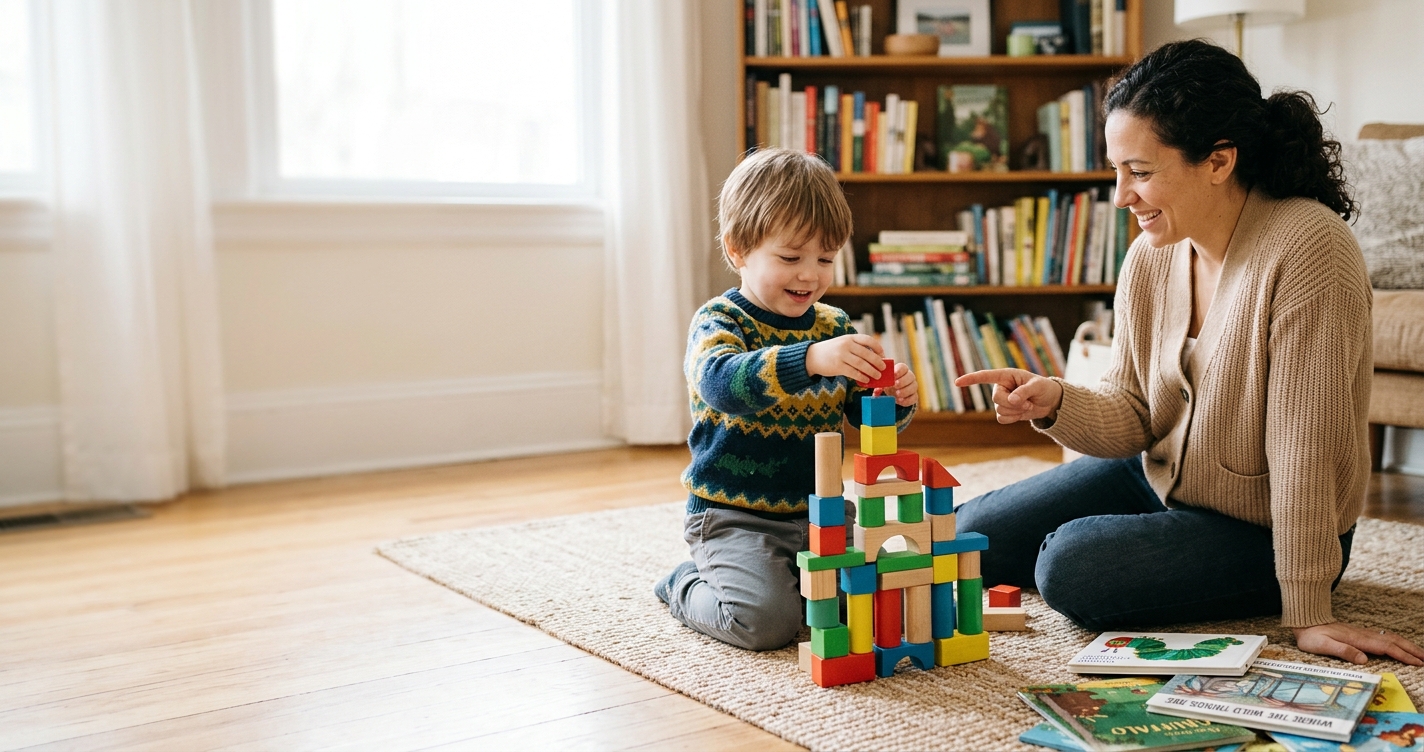
Picture a toddler stacking blocks. The tower falls and she laughs, then stacks it again. Nobody told her to run an experiment, but she is testing gravity, balance, and cause and effect, and she is having fun doing it.
If you have ever wondered how children learn, this is a good place to start. Children are not empty cups waiting to be filled. They are active explorers, and decades of child development research show that some approaches help them far more than others.
Here are seven truths that research and everyday experience both support.
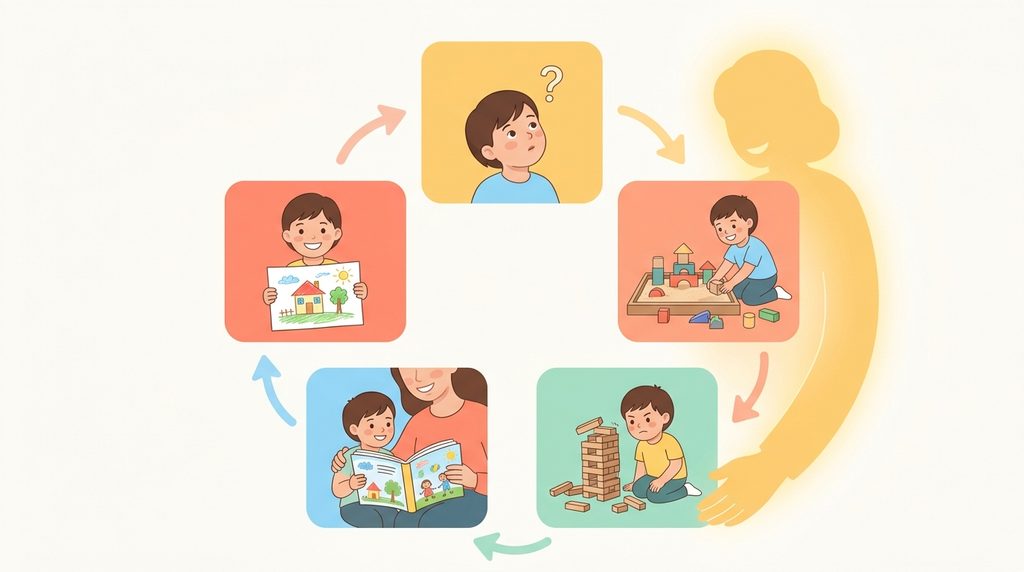
Each step feeds the next, and a warm adult is what makes a child willing to take risks, make mistakes, and try again.
1. Children Learn Best Through Play: Why Play Is Real Learning, Not a Break From It
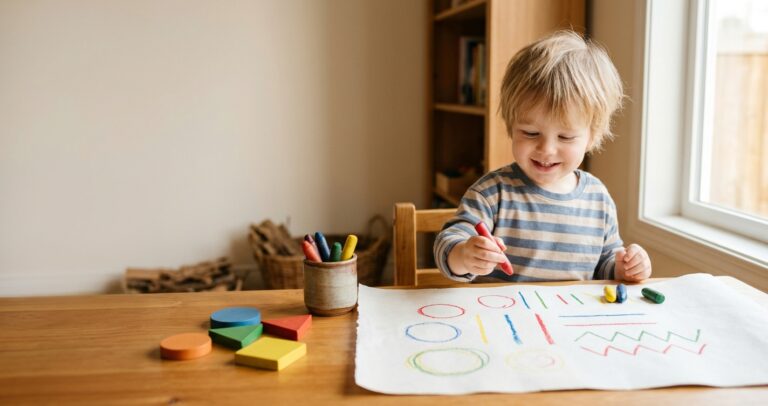
It can look like children are “just playing,” but play is one of their most powerful ways of learning. A review of the research on play identifies five qualities of playful learning: it is joyful, meaningful, actively engaging, iterative, and socially interactive.
The evidence on learning through play is encouraging but still developing. One research summary estimates that play-based approaches add about four months of progress, and it also notes that the evidence base is very limited. A preschool study found that children in a play-based program scored higher on vocabulary and grammar than peers in a more traditional program.
What to try: Give your child open-ended materials like blocks, cardboard boxes, sand, or playdough. Then step back and let them lead.
2. Guided Play Is the Sweet Spot: Where Adult Support Meets Child-Led Discovery
Free play and strict instruction are not the only two options. Guided play sits in between. The adult sets up the activity and asks good questions, and the child stays in charge of the exploring.
A review of 17 studies, published in Child Development, found that children can learn just as much or more from guided play in literacy, numeracy, and executive function. The research summary cited earlier also notes that most studies on play-based learning have focused on guided play.
Some experts urge caution. They point out that many of the studies had small samples. So guided play is promising, but it is not a magic fix.
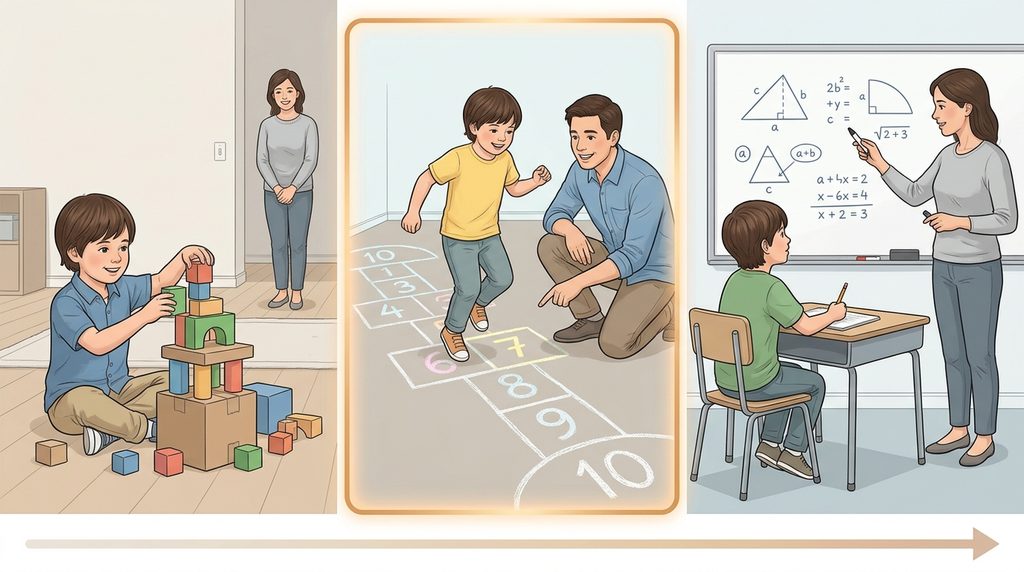
Guided play sits between free play and strict instruction: the adult sets the stage, and the child does the exploring.
What to try: Draw a giant number line on the floor with chalk and let your child jump forward to add and backward to subtract.
3. Curiosity Is the Engine: How Asking “Why?” Powers Attention and Memory
Children ask “why?” because their brains are built to find patterns and make sense of the world. When a child is curious, attention and memory both get a boost.
What to try: When your child asks a question, ask one back: “What do you think?” Even a wrong guess gets them thinking, and that thinking is where the learning happens.
4. Repetition Builds Mastery: Why Children Love the Same Story Forty Times
If your child wants the same story for the fortieth time, that is not boredom on your part to endure. Repetition is how young brains strengthen connections. Each rereading lets them notice something new, like a word, a picture, or a pattern.
What to try: Reread favorite books, replay favorite games, and don’t rush to the next new thing.
5. Relationships Come Before Lessons: How Safety and Connection Unlock Learning
Children learn more when they feel safe, seen, and connected. A warm, responsive adult makes a child more willing to take risks, make mistakes, and try again. The play research above stresses the social side of learning for exactly this reason.
What to try: Talk with your child during everyday routines like cooking, walking, or bath time. Narrate what you are doing and invite them to join in.
6. Mistakes Are Part of the Process: Teaching Children to Try Again
Children who are afraid of being wrong often stop trying. Children who see mistakes as normal keep going. How you react to a spilled cup or a wrong answer teaches them how to handle difficulty for years.
What to try: Try phrases like “That didn’t work. What could we try next?” and “I love how hard you worked on that.”
7. Every Child Learns at Their Own Pace: Why Comparing Children Rarely Helps
Children develop at different speeds, and a child who is behind in one area may be ahead in another. Comparing your child to others rarely helps. Watching your own child closely helps much more.
If you have real concerns about speech, movement, or learning, talk to your pediatrician or a child development specialist early.
Quick Tips to Support Your Child’s Learning at Home Every Day
- Read together every day, even for 10 minutes
- Offer open-ended toys over flashy ones
- Let them help with real tasks like measuring, sorting laundry, or setting the table
- Spend time outdoors and let them explore
- Keep screen time purposeful and talk about what they watch
- Praise effort and strategies rather than just results
Frequently Asked Questions About How Children Learn Best
How do children learn best? Most children learn best through active, hands-on, playful experiences with supportive adults who ask questions and give them room to explore.
At what age do children learn the most? The early years matter a great deal because the brain develops rapidly, but learning continues throughout childhood and beyond.
Is play really learning? Yes. Research links play to gains in language, early literacy, numeracy, and social-emotional skills. The strength of the evidence varies across studies, but the overall direction is positive.
What are the different learning styles in children? You may have heard of visual, auditory, and kinesthetic learners. Research has not found that teaching to a single “style” improves results, so a mix of seeing, hearing, and doing works best for most children.
How can I help my child learn at home? Read daily, talk often, play together, answer questions with questions, and celebrate effort.
Final Thoughts: Curious, Active, Safe, and Having Fun
Children learn best when they are curious, active, safe, and having fun. You don’t need expensive tools or a perfect plan. Playful moments, good conversations, and patience go a long way, so the next time your child is deep in play, you may be watching real learning happen.
Ready to turn curiosity into practice? Add your call to action here, such as a free printable, a workbook, or a newsletter signup.
Sources to Cite: The Research Behind This Post
- Education Endowment Foundation / Evidence for Learning: Play-based learning toolkit
- LEGO Foundation: The Role of Play in Children’s Development: A Review of the Evidence (Whitebread et al., 2017)
- Child Development review of guided play, as reported by The Hechinger Report
- White et al. (College of Charleston) on play-based preschool, as reported in The Conversation